Albatherium: Top Notch Tools for Traders - Trade Journal - Trading Community
Transforming the trading landscape with cutting-edge tools, advanced resources, and innovative solutions that empower traders to achieve their goals with precision and confidence.
Role
Senior UX/UI Designer
Industry
Blockchain & Web 3.0
Duration
6 months
Mission Statement
Empowering traders with tools and insights needed for peak performance and consistent profitability by providing accurate price movement predictions through advanced algorithms and data-driven insights.
Project Overview
AlbaTherium® is a cutting-edge platform designed to level the playing field for individual traders. It provides the same sophisticated tools and predictive capabilities that institutional investors use, enabling users to make data-driven decisions and avoid the pitfalls of emotional trading.
My Role
Senior UX/UI Designer
Spearheaded the user experience and interface design for the platform, ensuring a seamless and intuitive experience for users.
Collaborated with data scientists, developers, and trading experts to align design decisions with the platform's algorithmic capabilities.
Conducted user research with target audiences, including professional traders and retail investors, to identify pain points and needs.
Key Responsibilities
User Research and Insights Gathering
Conducted interviews and surveys to understand traders' challenges and workflows.
Analyzed competitor platforms to identify gaps and opportunities.
Information Architecture and User Flows
Mapped out comprehensive user journeys to guide traders from onboarding to making informed trading decisions.
Created wireframes and prototypes to test and refine user flows.
Designing Advanced Tools
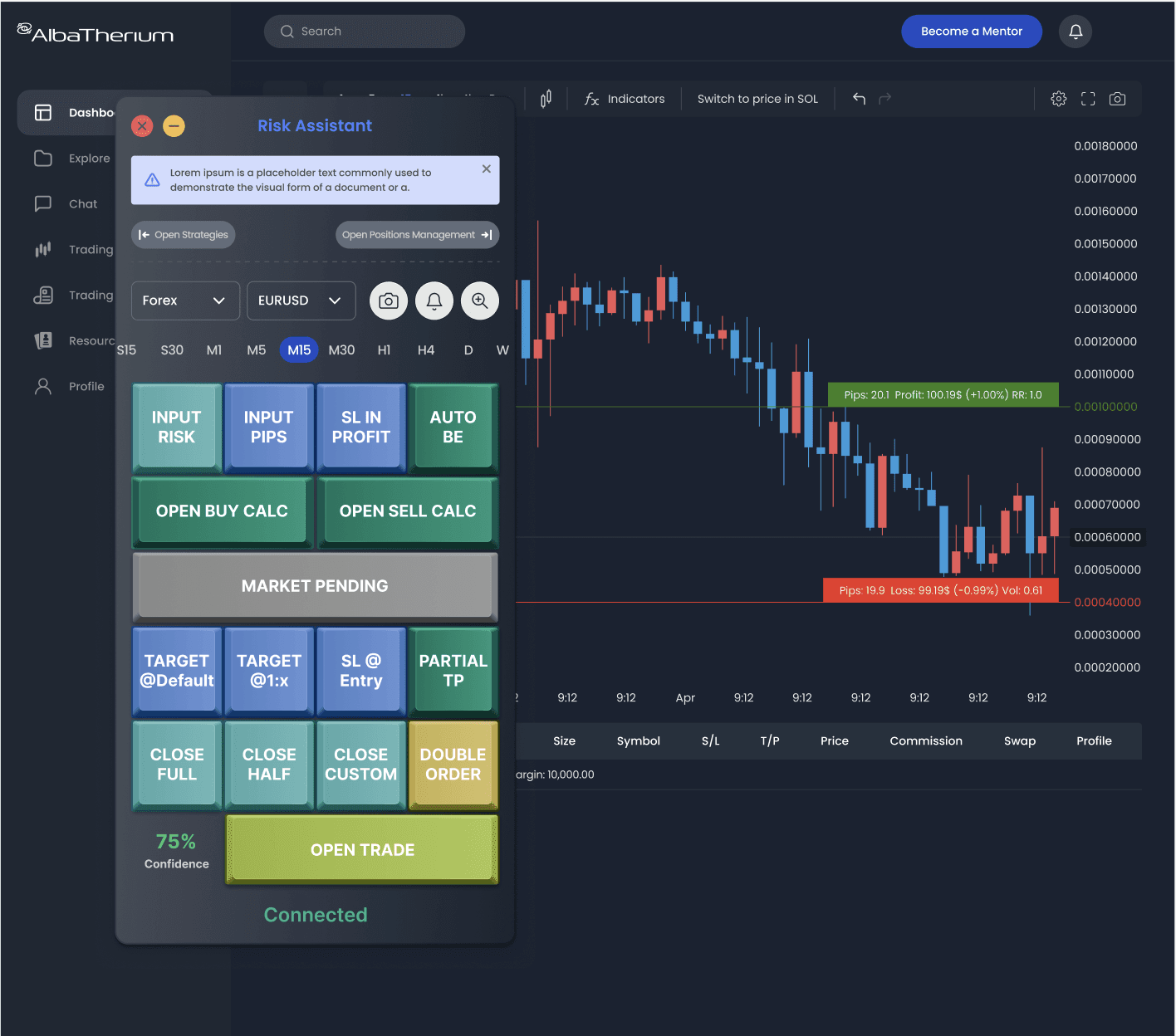
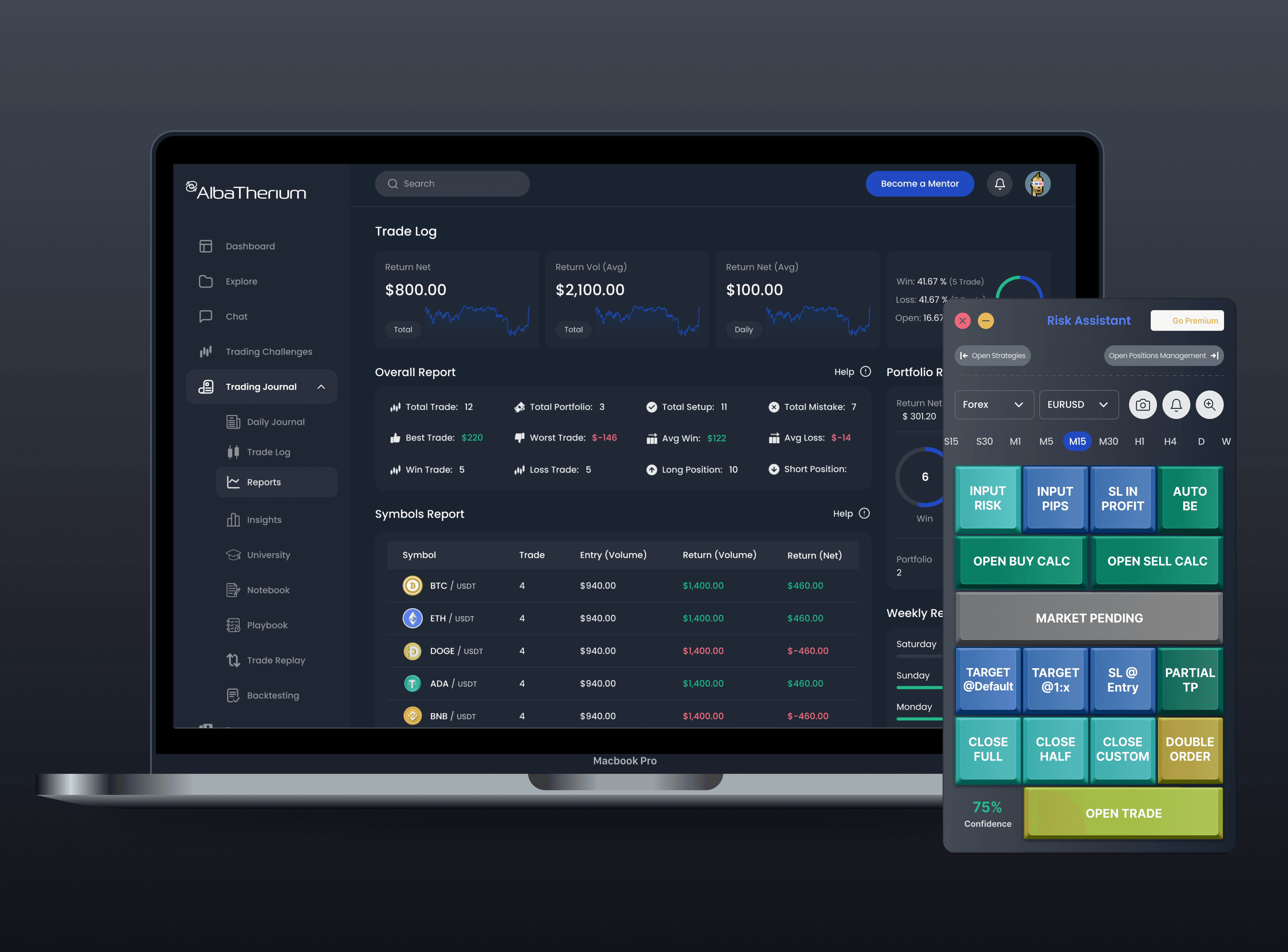
Designed an interactive dashboard showcasing real-time market insights and predictive analytics.
Developed user-friendly interfaces for complex features, such as risk management tools and customizable alerts.
Testing and Iteration
Facilitated usability testing sessions to ensure the platform's design met user expectations.
Iterated on designs based on feedback to enhance usability and functionality.
Challenges and Solutions
Challenge: Simplifying complex trading data for non-expert users.
Solution: Used visual storytelling and intuitive data visualizations to make insights accessible without oversimplifying critical details.Challenge: Balancing advanced features with a clutter-free interface.
Solution: Prioritized features based on user research and designed a modular layout, allowing users to customize their experience.
Results
Delivered a high-fidelity prototype that tested positively with 90% of users during usability testing.
Increased user engagement by 30% during the beta phase due to intuitive navigation and actionable insights.
Received commendation for bridging the gap between institutional-grade tools and individual traders' needs.
Tools Used
Figma for wireframes and UI design
Miro for collaborative brainstorming and journey mapping
Google Analytics for user behavior analysis during the beta phase
Learnings
Effective communication and collaboration with cross-functional teams were pivotal in aligning technical feasibility with user needs.
Focusing on emotional intelligence in design helped create trust and confidence among traders, reducing reliance on emotional decision-making
Mission Statement
Empowering traders with tools and insights needed for peak performance and consistent profitability by providing accurate price movement predictions through advanced algorithms and data-driven insights.
Project Overview
AlbaTherium® is a cutting-edge platform designed to level the playing field for individual traders. It provides the same sophisticated tools and predictive capabilities that institutional investors use, enabling users to make data-driven decisions and avoid the pitfalls of emotional trading.
My Role
Senior UX/UI Designer
Spearheaded the user experience and interface design for the platform, ensuring a seamless and intuitive experience for users.
Collaborated with data scientists, developers, and trading experts to align design decisions with the platform's algorithmic capabilities.
Conducted user research with target audiences, including professional traders and retail investors, to identify pain points and needs.
Key Responsibilities
User Research and Insights Gathering
Conducted interviews and surveys to understand traders' challenges and workflows.
Analyzed competitor platforms to identify gaps and opportunities.
Information Architecture and User Flows
Mapped out comprehensive user journeys to guide traders from onboarding to making informed trading decisions.
Created wireframes and prototypes to test and refine user flows.
Designing Advanced Tools
Designed an interactive dashboard showcasing real-time market insights and predictive analytics.
Developed user-friendly interfaces for complex features, such as risk management tools and customizable alerts.
Testing and Iteration
Facilitated usability testing sessions to ensure the platform's design met user expectations.
Iterated on designs based on feedback to enhance usability and functionality.
Challenges and Solutions
Challenge: Simplifying complex trading data for non-expert users.
Solution: Used visual storytelling and intuitive data visualizations to make insights accessible without oversimplifying critical details.Challenge: Balancing advanced features with a clutter-free interface.
Solution: Prioritized features based on user research and designed a modular layout, allowing users to customize their experience.
Results
Delivered a high-fidelity prototype that tested positively with 90% of users during usability testing.
Increased user engagement by 30% during the beta phase due to intuitive navigation and actionable insights.
Received commendation for bridging the gap between institutional-grade tools and individual traders' needs.
Tools Used
Figma for wireframes and UI design
Miro for collaborative brainstorming and journey mapping
Google Analytics for user behavior analysis during the beta phase
Learnings
Effective communication and collaboration with cross-functional teams were pivotal in aligning technical feasibility with user needs.
Focusing on emotional intelligence in design helped create trust and confidence among traders, reducing reliance on emotional decision-making